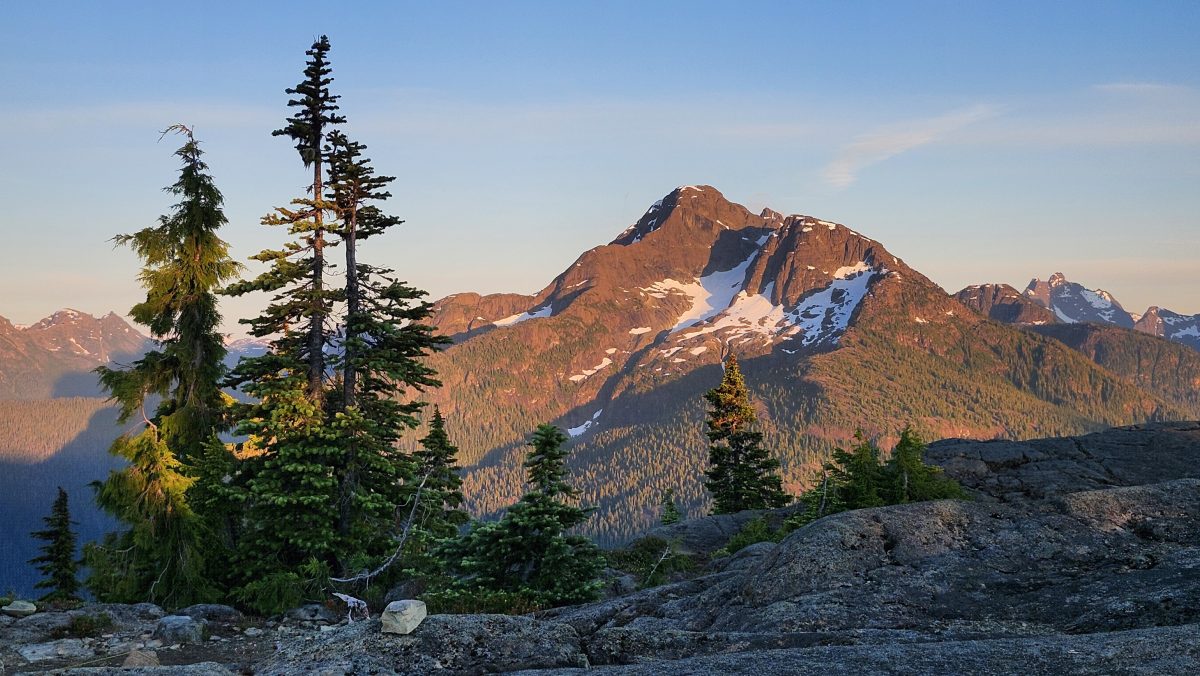
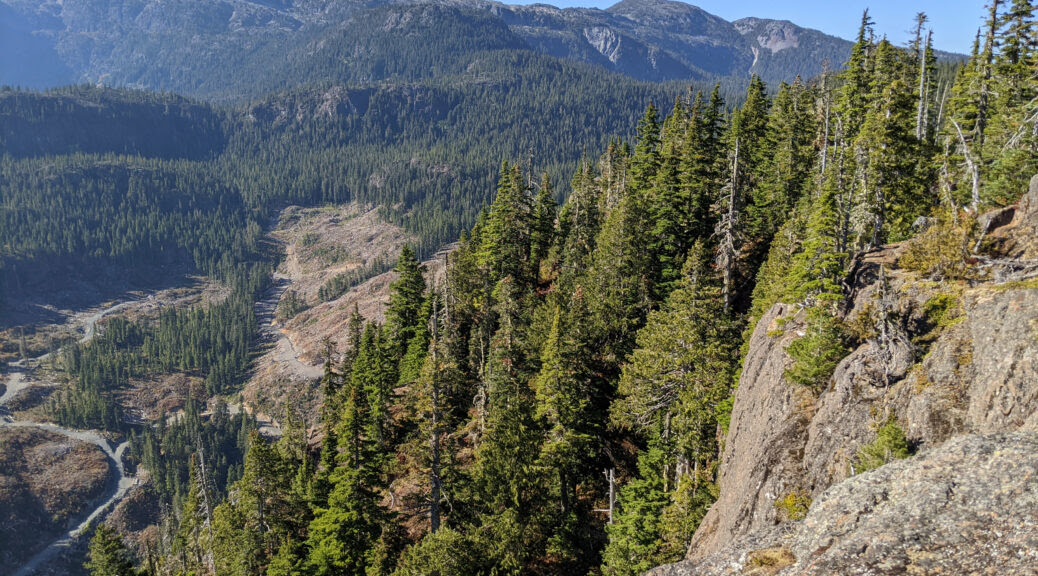
Kings Peak from Crest Mt, June 30, courtesy James McBeath
IN THIS ISSUE
GENERAL NEWS
BRIEF ANNOUNCEMENT OF UPCOMING EVENTS
GENERAL NEWS
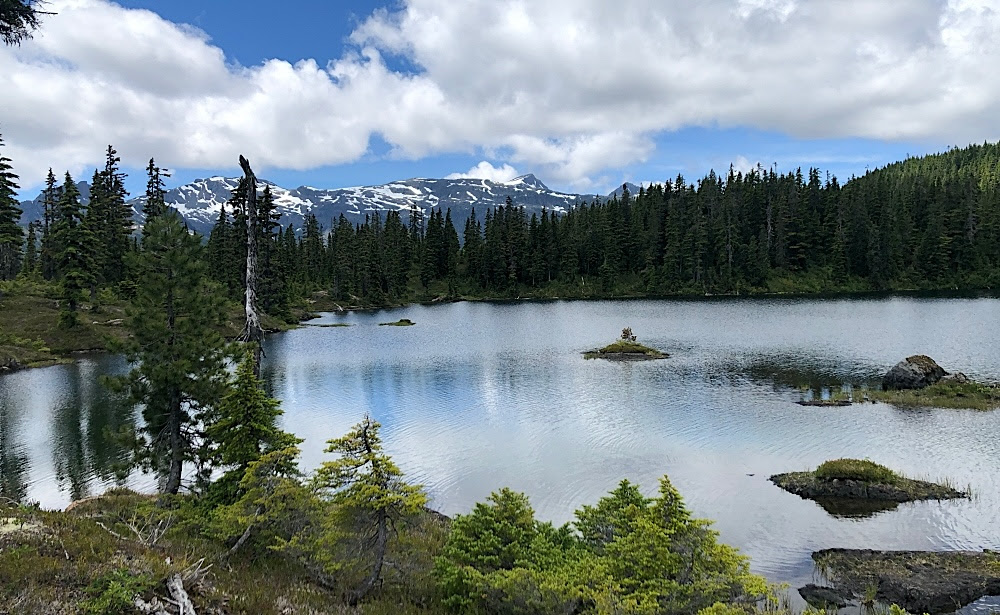
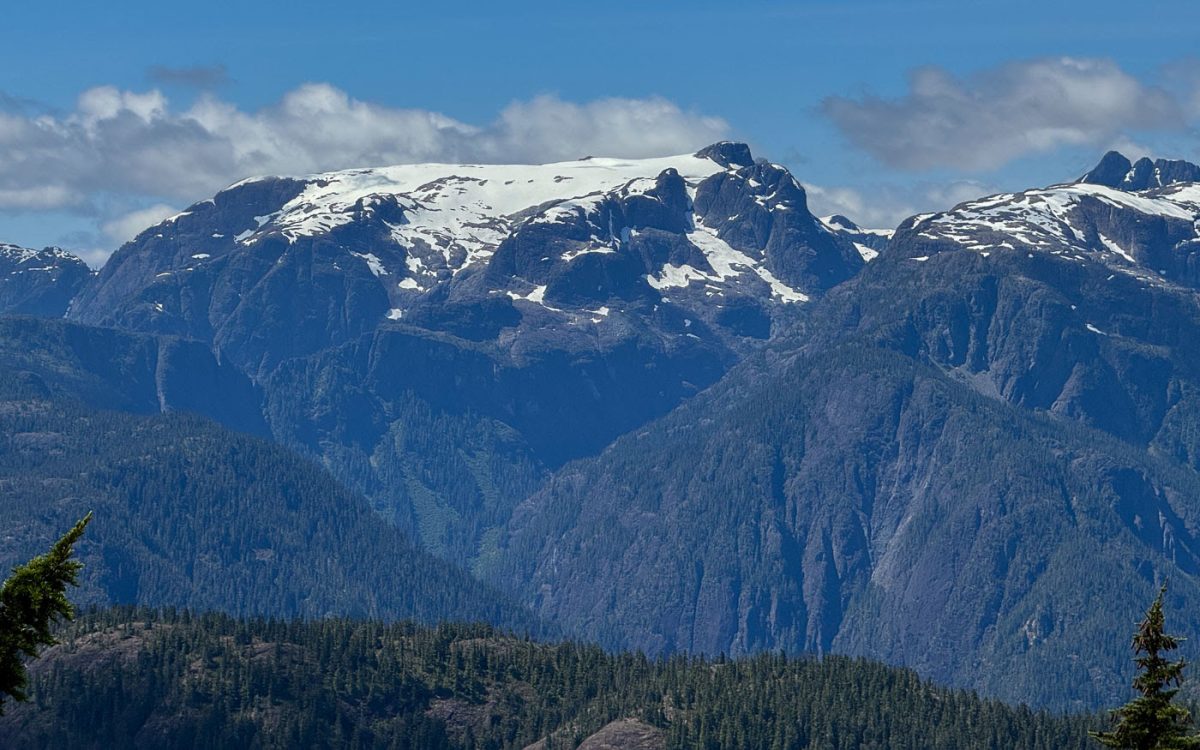
Alpine trails are already clear to mid-summer state. Even with the odd shower that has fallen in the past couple of weeks the Park overall is abnormally dry. Photos of Mt Albert Edward as seen from Mariwood Lake or the Glacier as seen from Mt Becher in the first week of July show how little snow is left on the iconic peaks above the Comox Valley
courtesy Jocie Brooks
courtesy Tim Penney
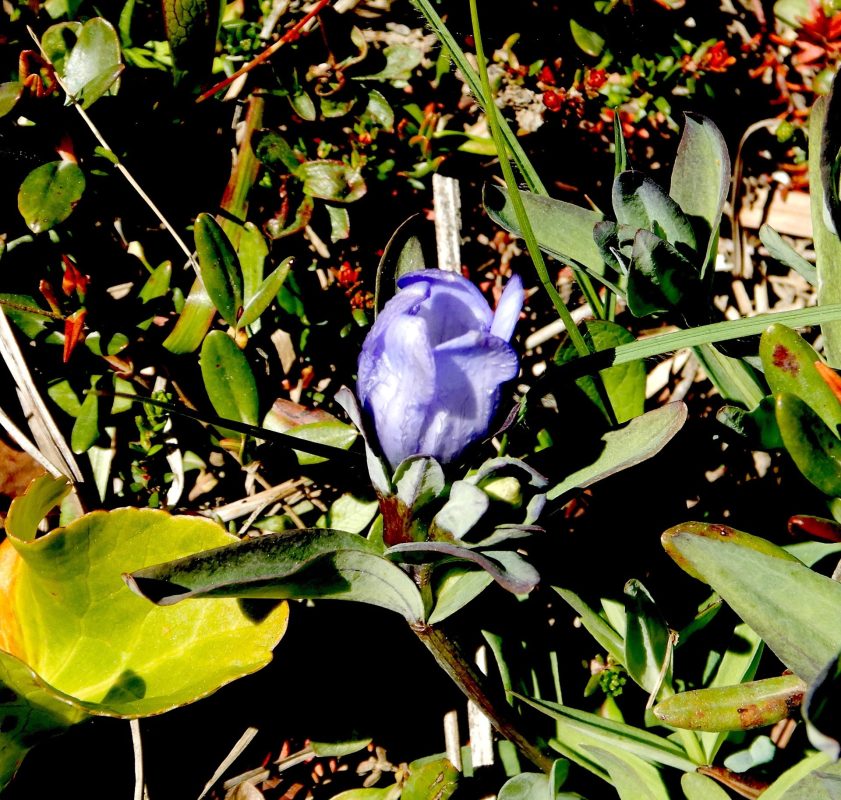
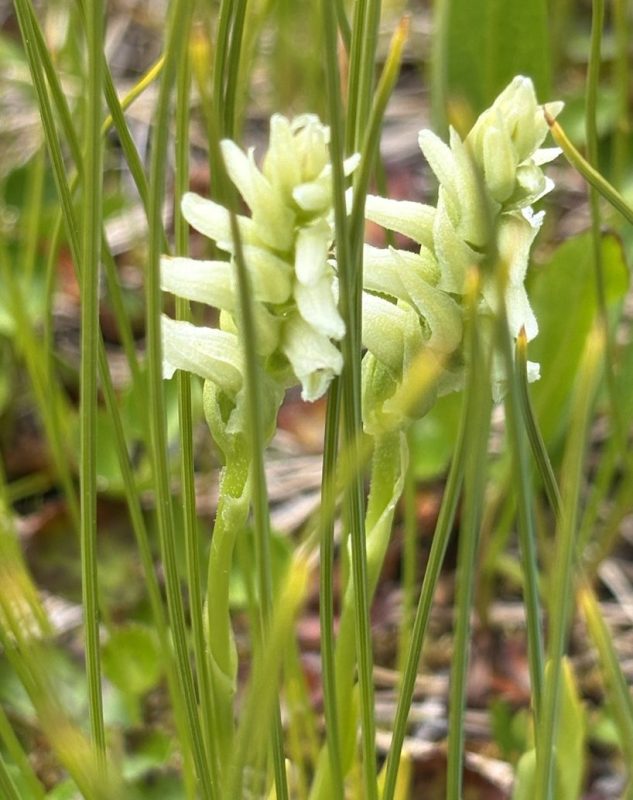
The vegetation in subalpine meadow areas is a good month ahead of what we used to think of as the norm. We even saw Gentians (Gentiana sceptrum) in bloom in Paradise Meadows by the end of June, and the Ladies Tresses (Spiranthes romanzoffiana) have started to appear; one used not to expect such species till the first week or so of August at the earliest.
courtesy ADM
courtesy Zeke Gilmore
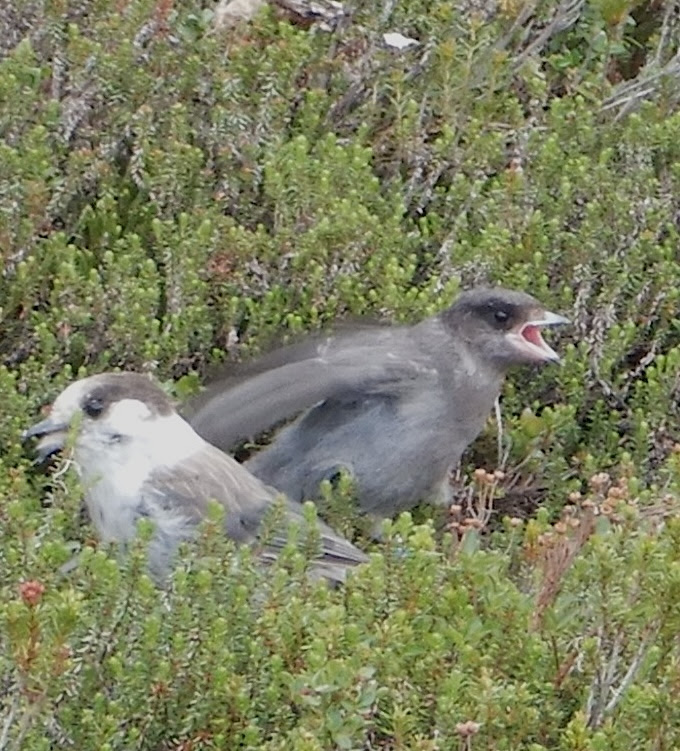
The early flowering of the blueberry species in hot temperatures has hindered fruit set and so one will see few berries on the three species of larger bushes. The lower-growing species in the Meadows – Bog Blueberry (Vaccinium uliginosum) and Dwarf Blueberry (V. caespitosum) – have bloomed later and one can see the berries developing. The lack of fruit may have an impact on bears who rely on consuming vast quantities of berries in preparation for winter hibernation. Bird species have started their nests early, and now in the Meadows the young of many have fledged and are now continuing to demand food from the parents although they can in fact feed themselves. So the young Canada Jays (Perisoreus canadensis) identifiable as darker than their parents, still pester them for food, which we observed with Andie Siemens and Dan Strickland on the walk around the Meadows on July 4th after Andie’s presentation.
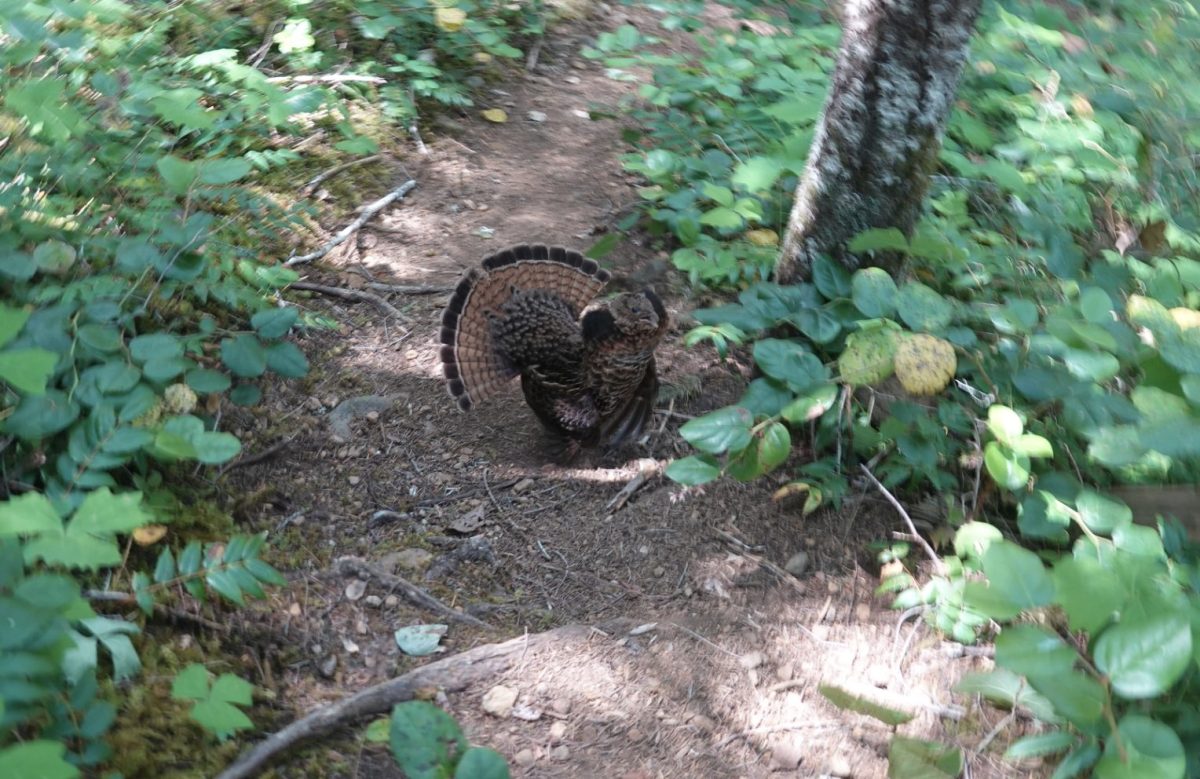
In the Buttle area, closer to the west coast of the Island, one expects to find damper conditions. However, on the north forested slopes leading up to Kings Peak, all the smaller creeks are dry. The photo at the head of the Newsletter taken from Crest Mountain near the end of June shows how little snow remains on the mountain other than in the north facing couloir that often sees snow year round. And down at lower elevations, trails such as the one along the Elk River valley have lost most of their muddy sections. There too fledglings are out of the nest, herded by parents. A family of Ruffed Grouse (Bonasa umbellus) that wandered close to the trail prompted the parent adopt its aggressive pose, along with hisses and screeches, to chase the unwary hiker away from her young.
courtesy L Maingon
OVERVIEW OF UPCOMING EVENTS
Saturday July 18
Presentation: “Source Encounters - Puntledge
River Watershed Explorations.”
Time: 9:00 am to 1:00 pm Place: Ruth Masters Nature Hall, lower floor of the Strathcona Park Wilderness Centre, Paradise Meadows Trailhead. Presenter: Meaghan Cursons (Connected by Water) Pre-registration would be appreciated.
Join Meaghan Cursons storyteller, conservationist and community educator with the CVRD’s “Connected by Water” programme for this presentation in which she will explore the geological origins of Vancouver Island, prehistoric oceans and ice ages, indigenous and settler presence on the landscape, colonial impacts, land ownership complexities, and the human impacts, fire risk, and environmental issues the Puntledge (Comox Lake) watershed faces today. The areas of the watershed subjected to our use extend from Strathcona Park to the Cumberland Trails and from the Cruikshank Canyon to the Comox Coal Fields.
The presentation will be followed by an easy guided walk into Paradise Meadows with SWI Director Loys Maingon to examine the ecosytems of one of the areas that feeds the Puntledge Watershed.
Sunday July 19
Interpretive Walk for Families :
Nature’s Wonders in Paradise Meadows
Time : 9:30 AM- noon Place: Meet at the Strathcona Park Wilderness Centre, Paradise Meadows Trailhead Leaders: SWI summer students Kiane and Zeke Pre-registration would be appreciated.
Join SWI’s Kiane and Zeke, naturalist interpreters as they lead this easy family-oriented walk on the boardwalks in the Meadows, teaching your kids about many of the amazing plants and animals around the ponds or in the woods, and how to spot and identify them.
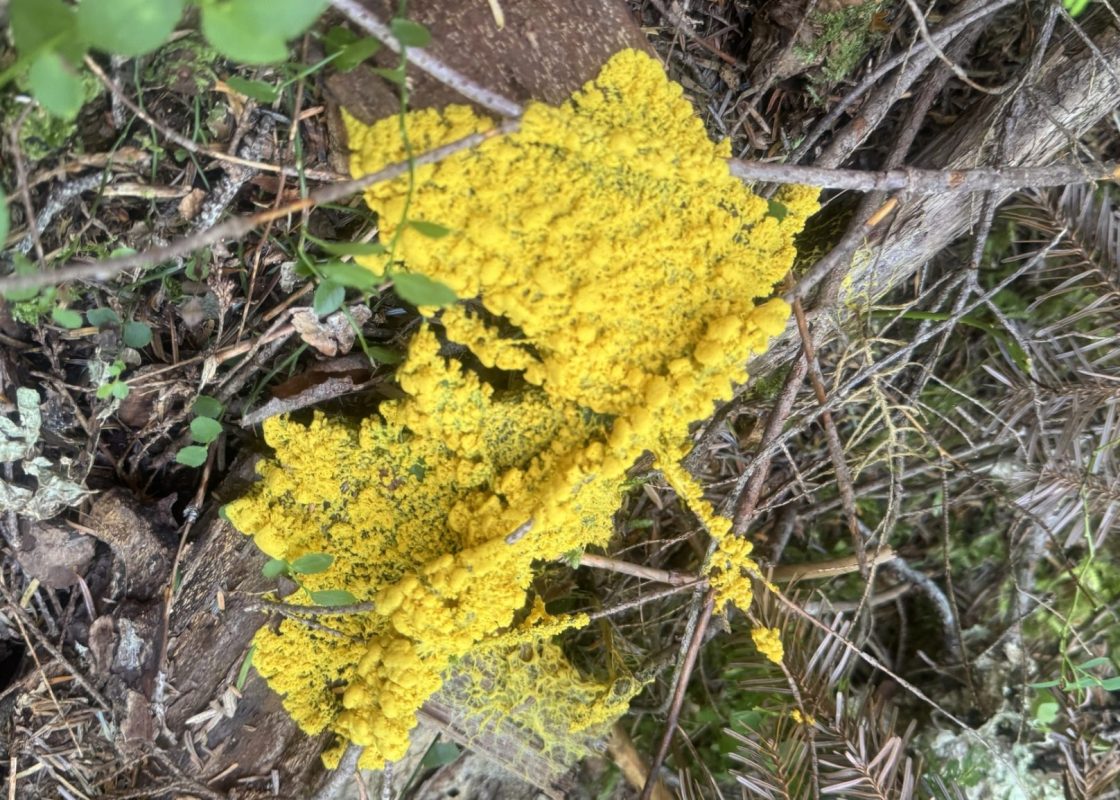
What exactly is this bright yellow mass to be seen moving imperceptibly across logs or mossy surfaces or debris on the ground? The common name given in iNaturalist is the somewhat revolting“Dog’s Vomit Slime Mould”. Another common name is “Troll’s Puke”. But don’t let names put you off. Zeke is our resident expert in slime moulds and will explain exactly what these fascinating brightly coloured organisms are.
Saturday July 25
Interpretive Walk: "Plants that Heal or Harm”
Time : 9:30 AM- noon Place: Meet at the Strathcona Park Wilderness Centre, Paradise Meadows Trailhead Leader: Plant Ecologist Glenn Gustafson Pre-registration would be appreciated.
Join Plant Ecologist and long-time SWI volunteer, Glenn Gustafson, guiding you on his popular walk around the Paradise Meadows Loop Trail (2.8km), as you learn about the properties of the sub-alpine plants that are good for you and those that are quite the opposite.
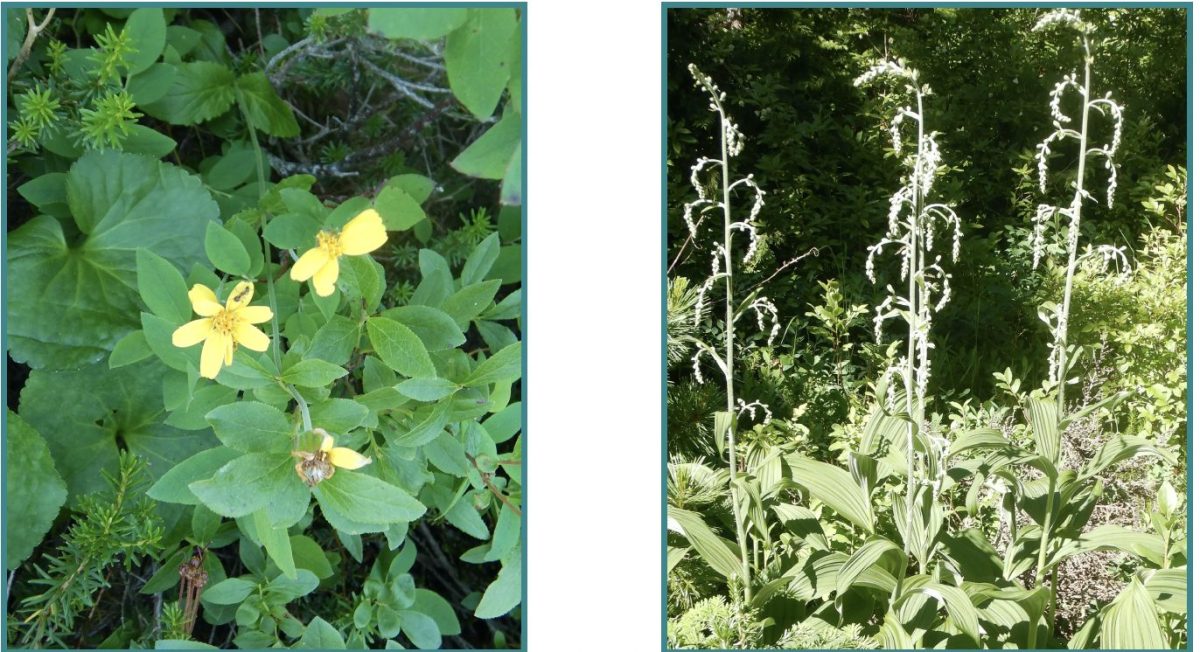
Discover the healing benefits of plants such as Mountain Arnica (above left) and the toxic constituents of beautiful but deadly plants such a False Hellebore (above right).
Sunday July 26
Guided Hike - Mt. Becher (Forbidden Plateau)
Time : 9:00 AM- 3:00 PM Place: Meet at the parking area at the top end of Forbidden Plateau Road Leader: SWI Summer student Mateo Jaeckel Pre-registration would be appreciated.
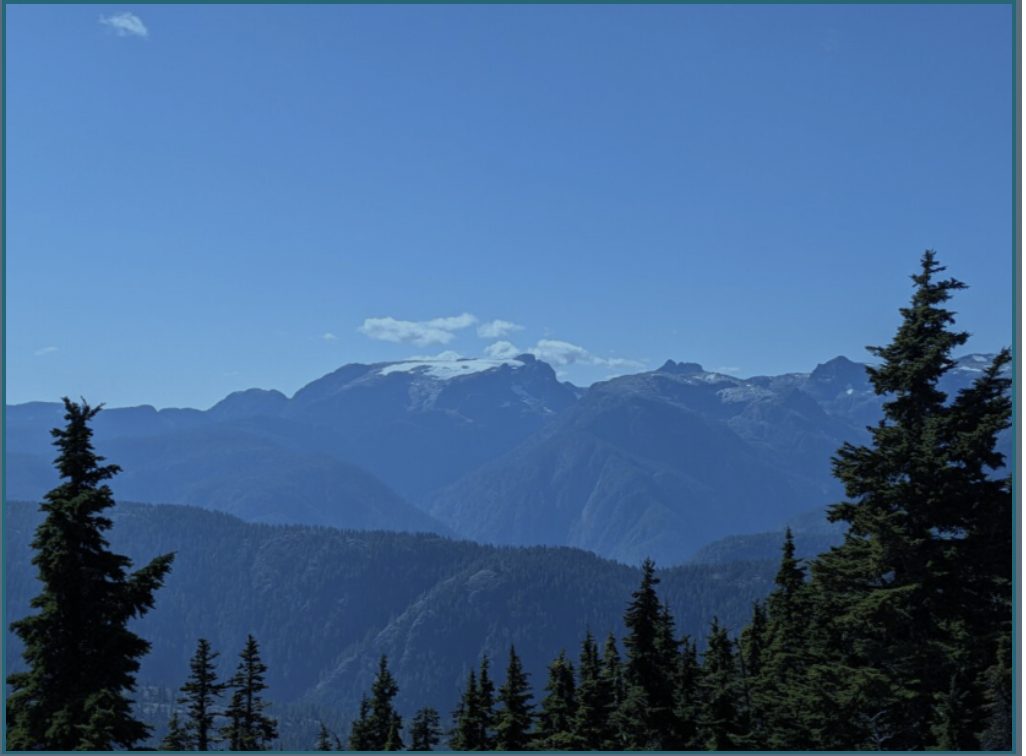
SWI Summer Student and Environmental Program Coordinator Mateo Jaeckel will lead this intermediate Hike (11 km round trip, 700m elevation gain with some steep sections) up Mt. Becher, featuring superb views of the Comox Valley and the mountains of Strathcona Provincial Park including the Glacier depicted in the photo below ( or the closeup view near the top of the newsletter).
courtesy Mateo Jaeckel
Note that this hike does NOT start from the Paradise Meadows Trailhead, but from the parking area at the end of Forbidden Plateau Road (the road that passes Nymph Falls, accessed off Piercy Road) approximately a 30 minute drive from Courtenay. The drive up the mountain is on a gravel road with some steep sections.
Advice for all our walks and hikes – Sturdy shoes are a must; always be prepared for sudden changes in the weather in the mountains; Always carry lots of water, and sun protection. Though we prefer that you not bring your dog on our hikes, if you do you are required in the Park to keep dogs on leash at all times.
Sign Up for Email Mailing List Below!
If you would like to receive our E-Newsletter automatically to your email please fill enter your email address below.
For more information or to contact Strathcona Wilderness Institute (SWI) please email: strathconawilderness@gmail.com