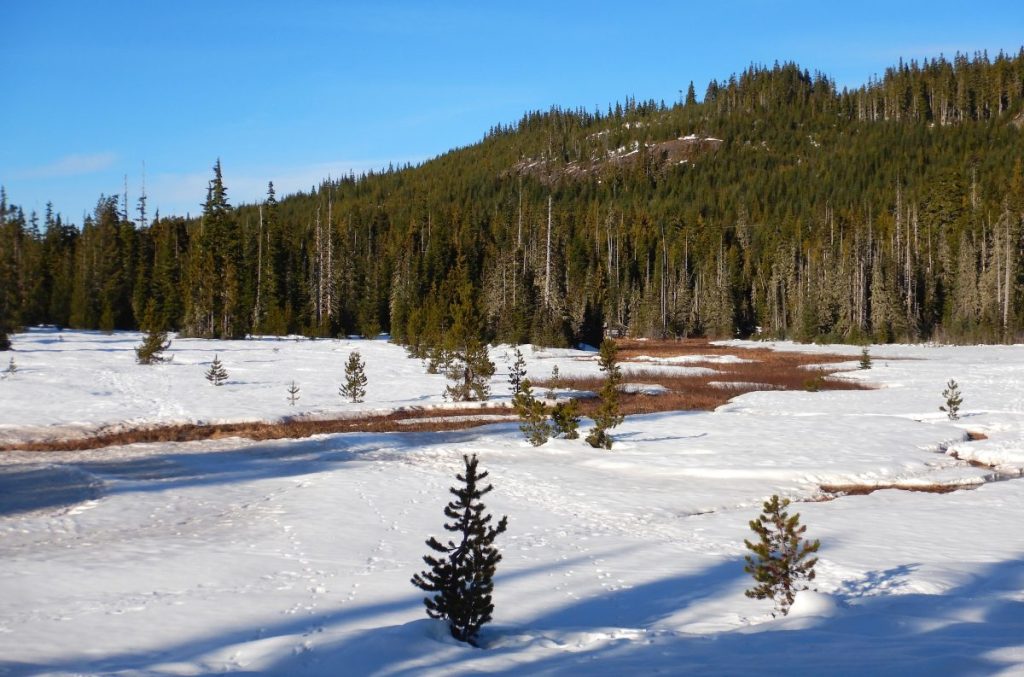
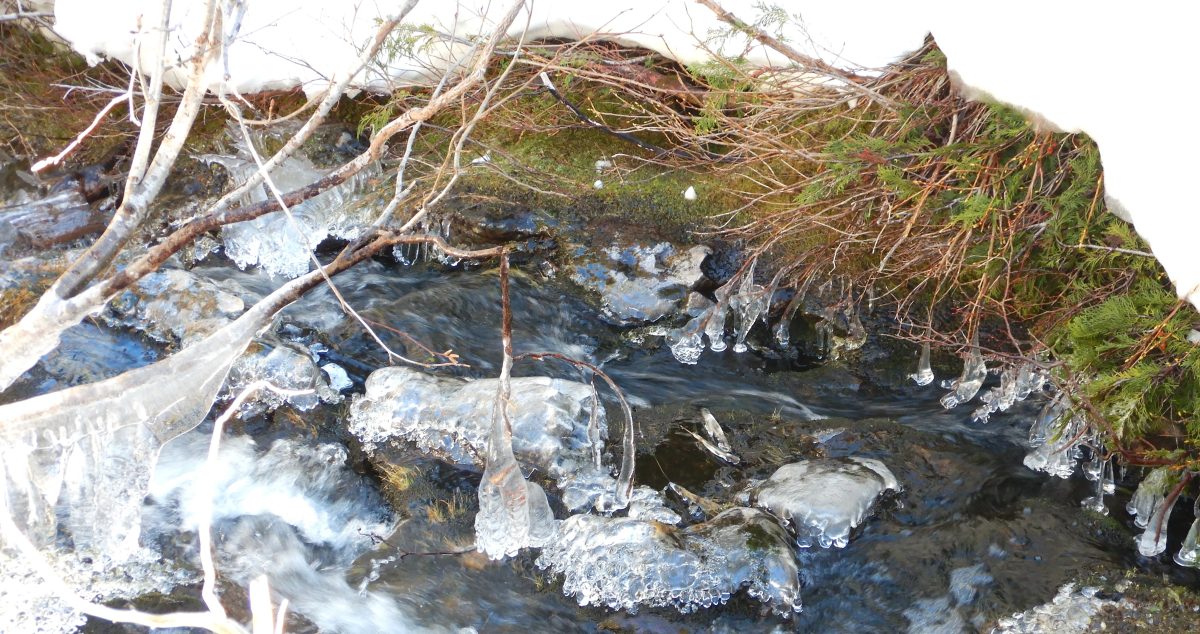
WELCOME TO SPRING IN MID JANUARY

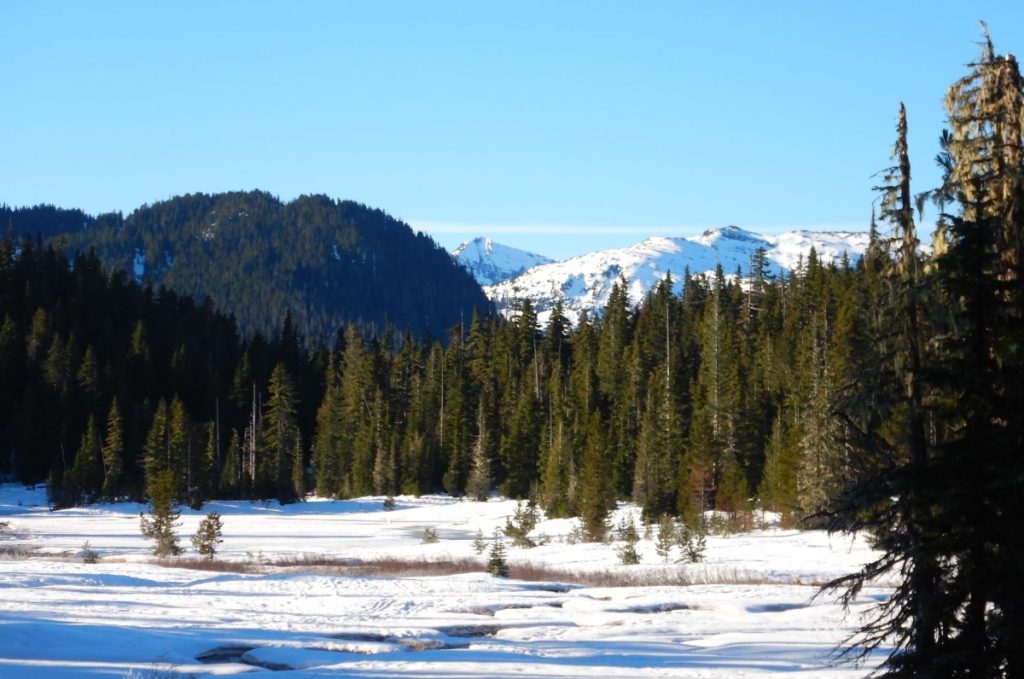
Battleship Lake outflow creek, Jan. 19

IN THIS ISSUE

  • STEVE SMITH (1939-2025) – repeat notice
  • CONDITIONS IN THE PARK
  • UPCOMING EVENTS
  • ANOTHER RECENT ARTICLE ADDED TO OUR WEBSITE
  • NATURALISTS’ NOTES – “Canadian” fauna in the Park

STEVE SMITH (1939-2025)

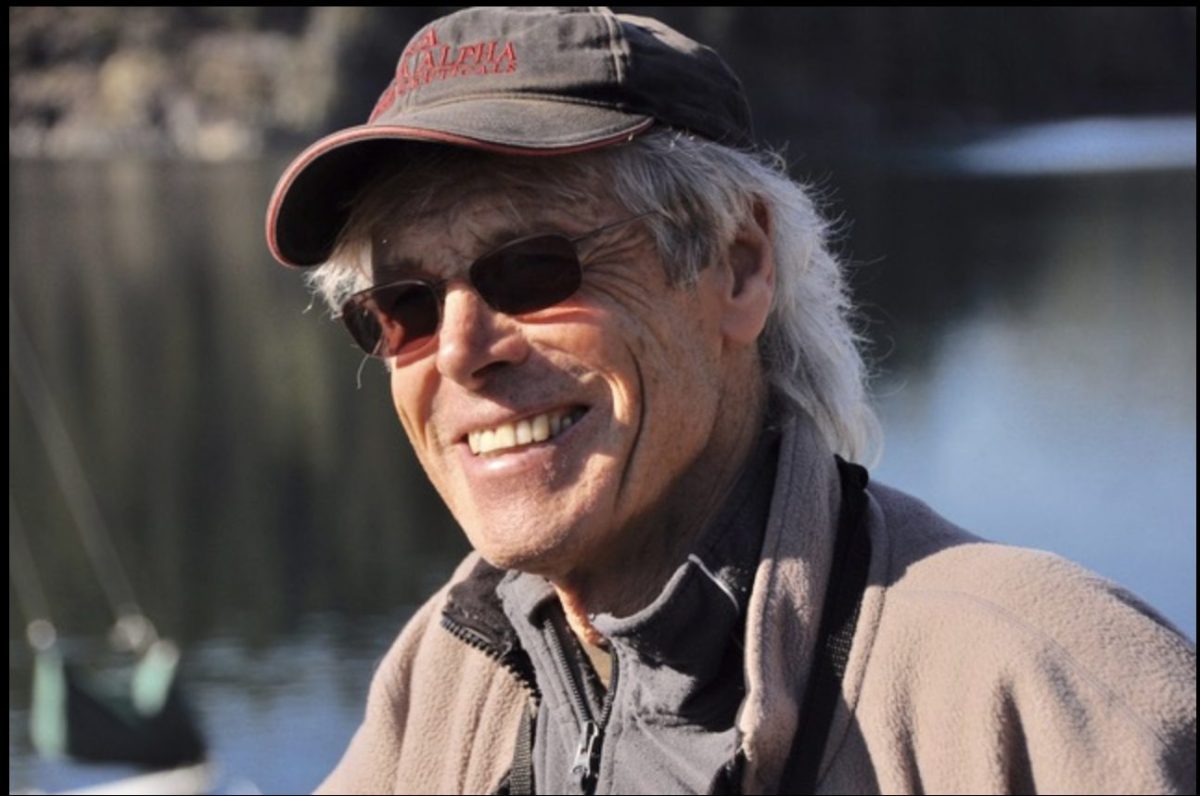
courtesy Marlene Smith

We were all greatly saddened to learn that on December 4th Steve Smith, prominent founding director of SWI, had passed away. Earlier in the summer Steve (together with other founding directors) was guest of honour at SWI’s 30th Anniversary Celebration. Without his inspiration and tireless dedication to educating the public about Strathcona Provincial Park, SWI would not have existed. Steve will always be remembered for his big smile, his wit, his songs and his love of Strathcona Park.

Steve grew up in Nottingham, England, nurturing his passion for the outdoors and especially mountain environments through climbing in the Peak District of northern England and the Cairngorms and Cuillin of Scotland. He first came to Canada in 1971 as member of a climbing expedition to Baffin Island with Doug Scott (renowned British mountaineer) and Rob Wood (originally also from England, another of our founding directors, also originally from England). Encouraged by Rob Wood to immigrate to Canada, he came to BC in 1977 to become an instructor in the COLT programme at Strathcona Park Lodge where Rob worked. After a spell in the early 1980s in Golden (where he met his lifetime partner Marlene), he returned to Vancouver Island and became active again at SPL not only in their educational programmes, but also continuing the work he started in Golden, outdoors programmes for troubled youth.

Along with Marlene, he was one of the founders of Friends of Strathcona Park in 1986 in the wake of impending changes to the Park’s boundaries and reclassifications that would facilitate logging and mining operations within it. In 1988 the “Friends” staged one of the first major environmental blockades in BC in order to prevent Cream Silver Mines from carrying out their planned operations, attracting the involvement of luminaries such as David Suzuki. Steve was front and centre along with Marlene, Ruth Masters, Melda Buchanan, Kel Kelly and hundreds of other peaceful protestors. While the development of the Strathcona Park Master Plan was an official outcome of the protest, Steve and members of FOSP realized that it was crucial to ensure that the general public knew about the incredible biodiversity of the wilderness areas within the Park and the importance of protecting them. So emerging from a conference held in 1993 “Where the Wild Things Are” came the resolution to form a Society whose mandate was to educate people about the Park.

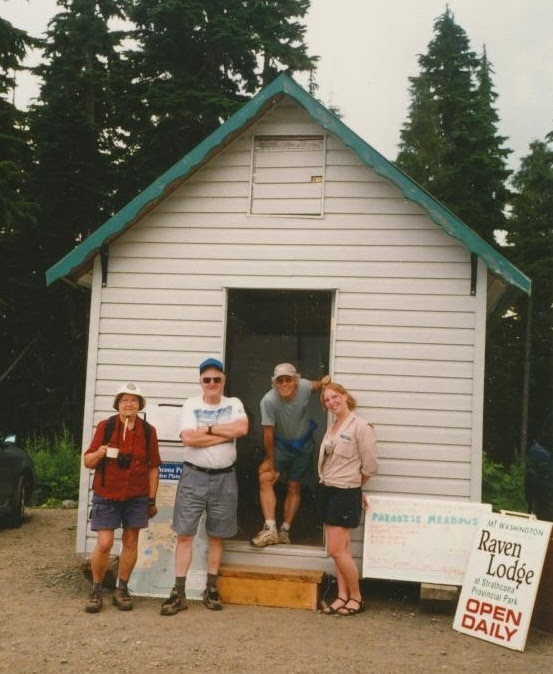
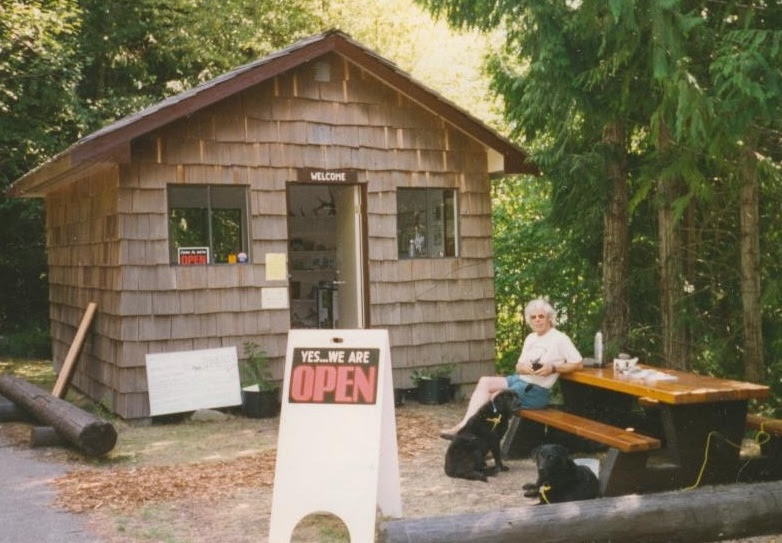
Spearheaded by Steve, Strathcona Wilderness Institute came into being in 1995, under the guidance of Les Carter’s legal expertise and with a board that included the skills of naturalist Betty Brooks, architect and outdoors educator Rob Wood, and consummate “organizer” Peggy Carswell. Steve would remain a director for 21 years overseeing the establishment of the core guided walks, hikes, workshops and courses, all led by Volunteers, providing the public with naturalist programmes no longer offered by BC Parks. In 2000 he established volunteer-run information booths out of a Nordic “warming hut” at the Paradise Meadows and a former ranger cabin at Buttle “because no one else would do it”. Over the next ten years he worked selflessly and tirelessly to garner the bureaucratic permission and financial backing for the realization of his dream of an appropriate structure for the Institute, the Strathcona Park Wilderness Centre, designed by Rob Wood, and eventually completed in 2011 on the Parks 100th anniversary. Numerous volunteers, supporters and donors were involved in this project, too many to name, but we will mention Marlene, though deeply involved in FOSP (as well as her veterinary practice) standing staunchly at Steve’s side throughout. This building has remained the principal locus of SWI’s activities in the Park.

Without Steve, SWI as we know it today, and the Wilderness Centre, would not exist. We are immeasurably indebted to him, and it was a privilege for all of us to see him at the 30th Anniversary gathering held this past July.

We will keep you informed of our plans to commemorate Steve’s legacy to the Park as they evolve in the coming months.

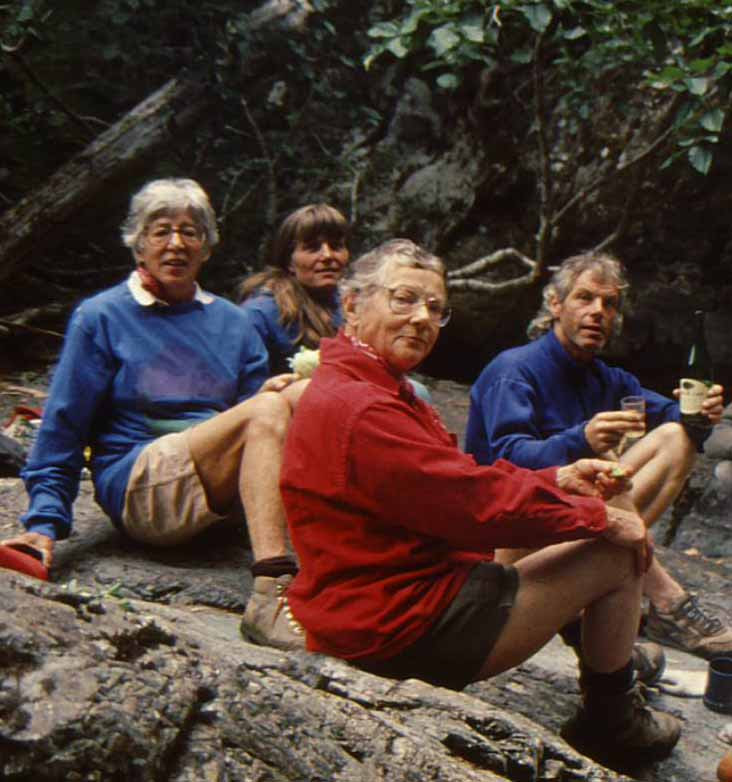
Below are a few photos from over the years from various sources.
Dedicated Protectors of the Park : Melda, Marlene, Ruth and Steve.
Forerunner of the SPWC
Buttle Hut
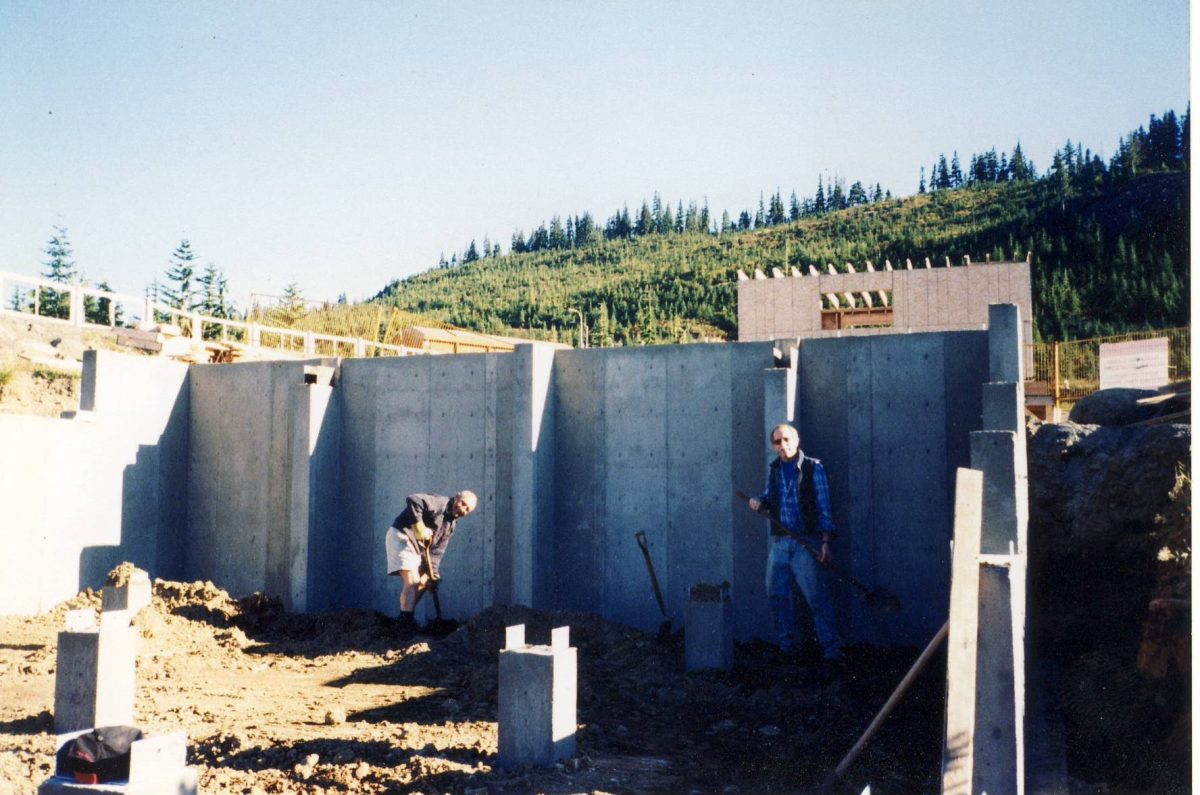
Concrete foundations of SPWC
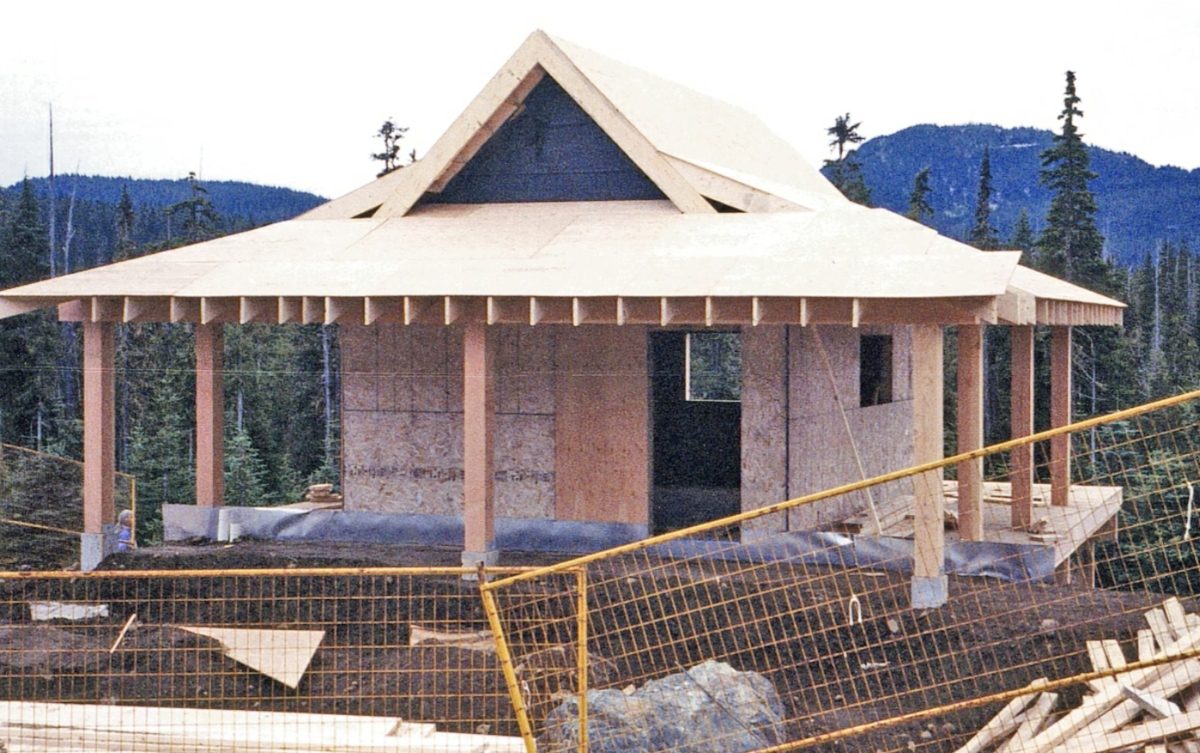
Building partially completed
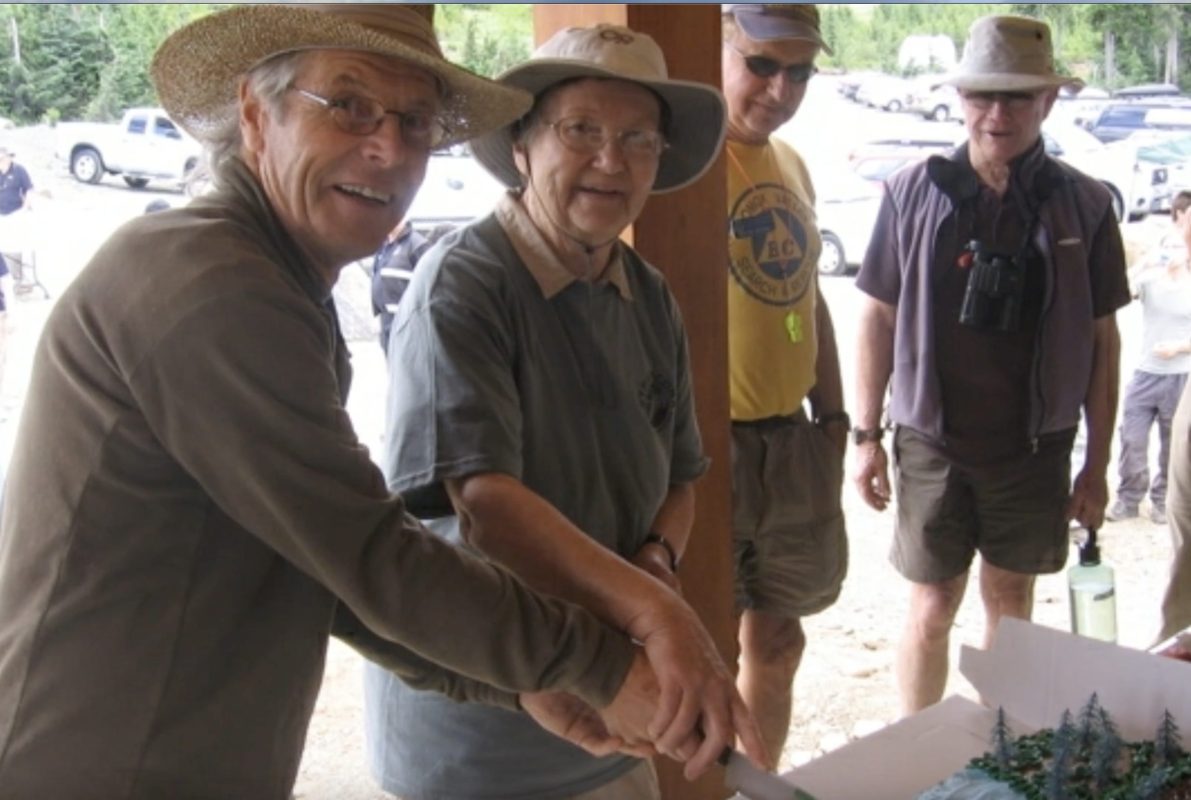
Betty and Steve cut celebratory cake - 2012
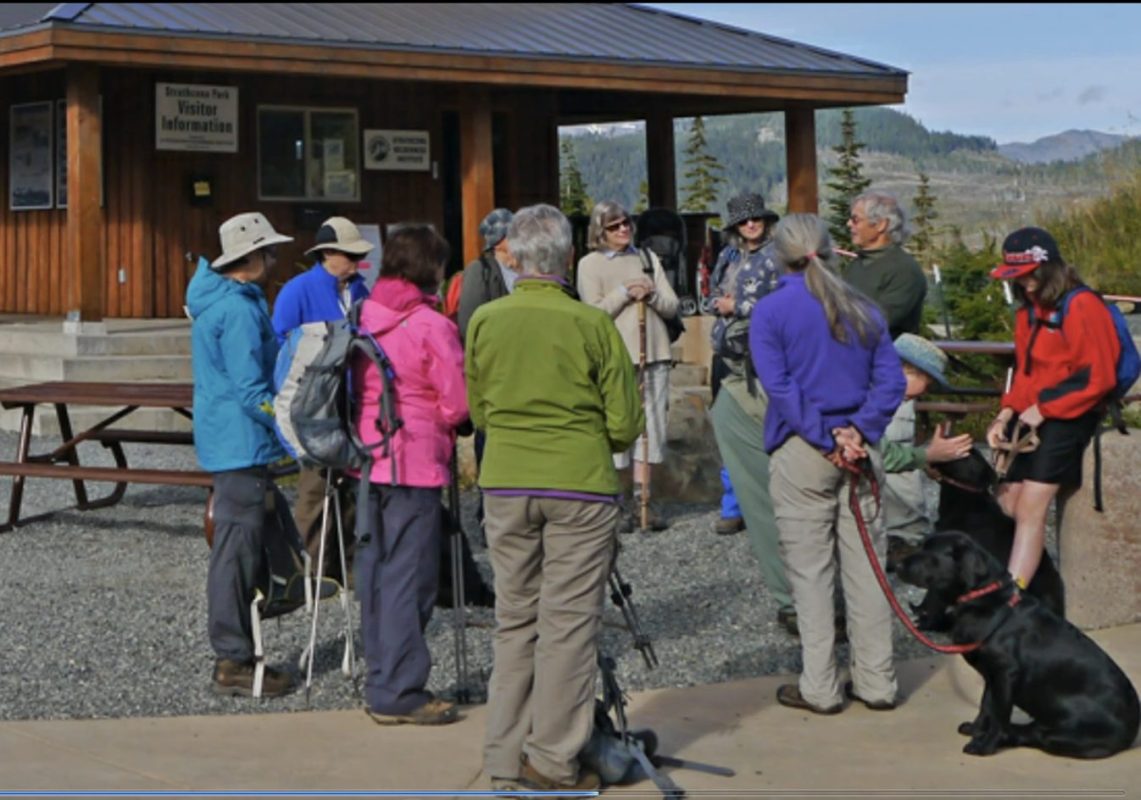
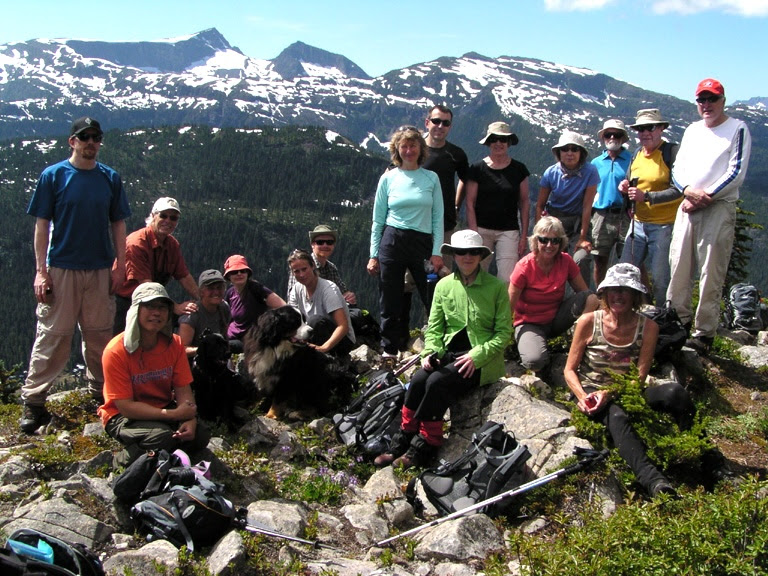
Steve with hiking group in front of SPWC
Group on Mt Allan Brooks - Steve & Marlene - 2nd/3rd back left
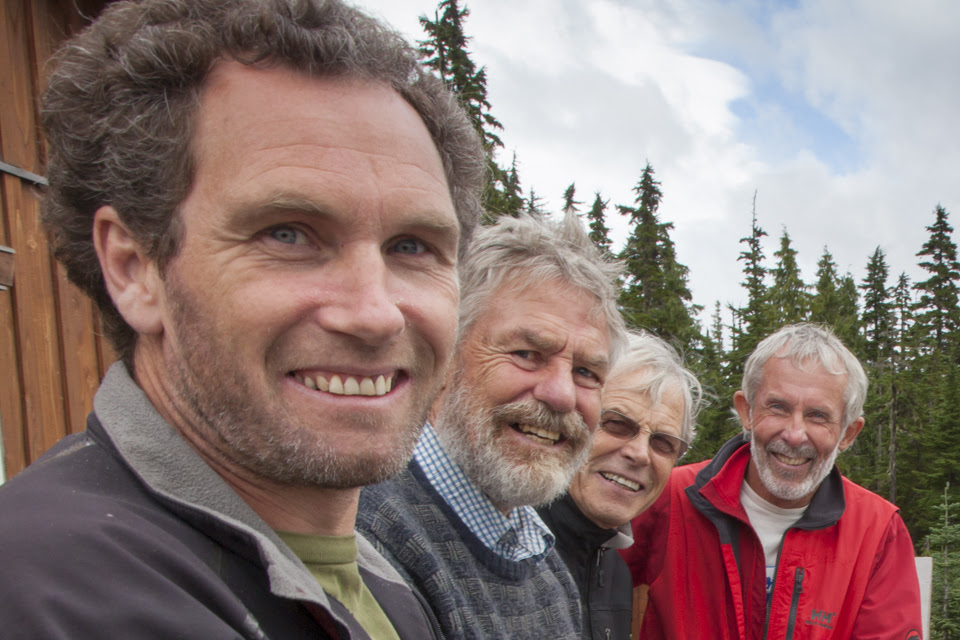
July 19th -30th Anniversary event - Directors former and current l to r John Waters, Rob Wood, Steve Smith & Lindsay Elms
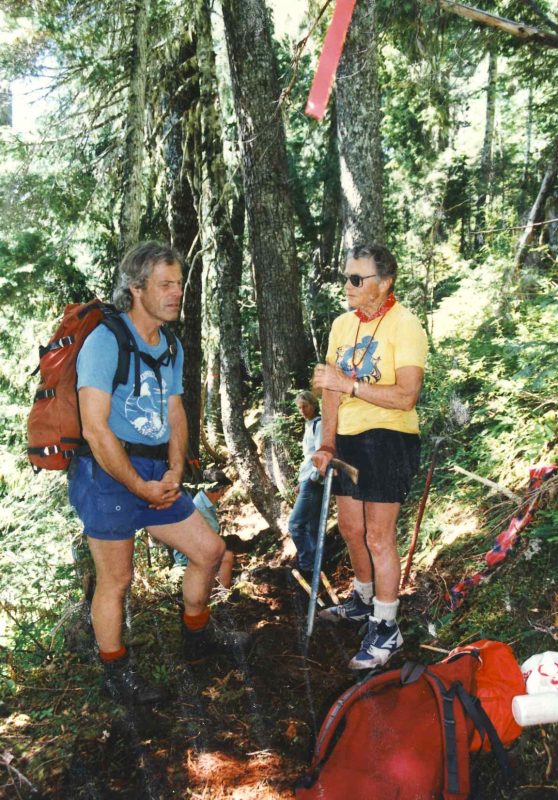
Unforgettable Heroes of Strathcona Park, Steve and Ruth in 1998. courtesy Marlene Smith

[A history of the construction of the SPWC is to be found on our Website – https://strathconapark.org/about-us1/information-centres/

CONDITIONS IN THE PARK

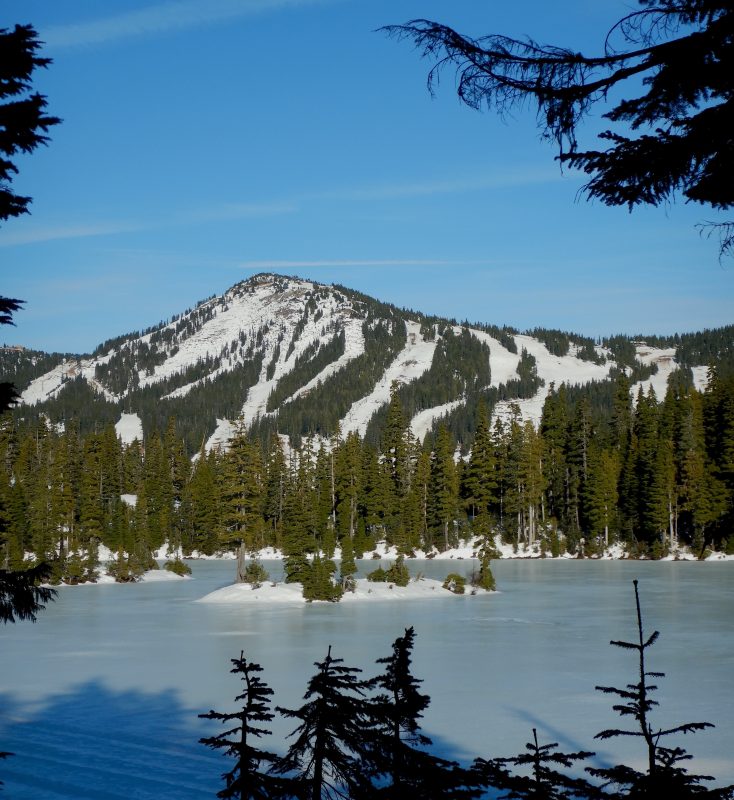
Since the last Enewsletter (January 13th), snow conditions in the Park have not improved for the snow-sport enthusiasts. As spring conditions prevail with daytime temperatures reaching double digits on Mt Washington, only 4 of the Nordic/Skate Ski trails have been open and the resort has closed almost all runs during the week – barely covered slopes can be seen below in the photo taken from Battleship Lake.

The boardwalk around the Meadows is covered by about 30 cm of compacted snow and ice. The grasses are visible in the wetland areas, and the route snowshoers take across the main pond towards the Battleship trail for the moment severed by melt water.

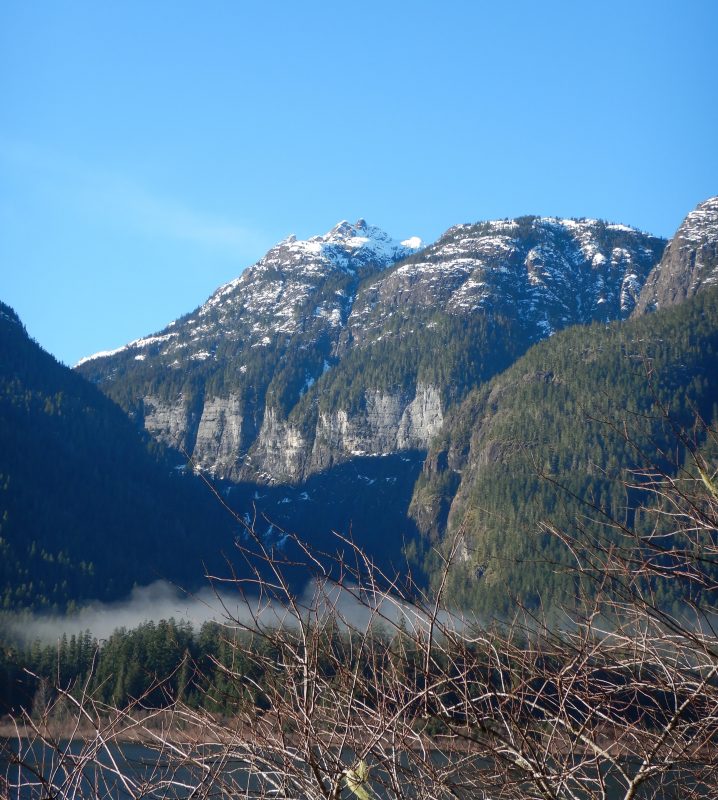
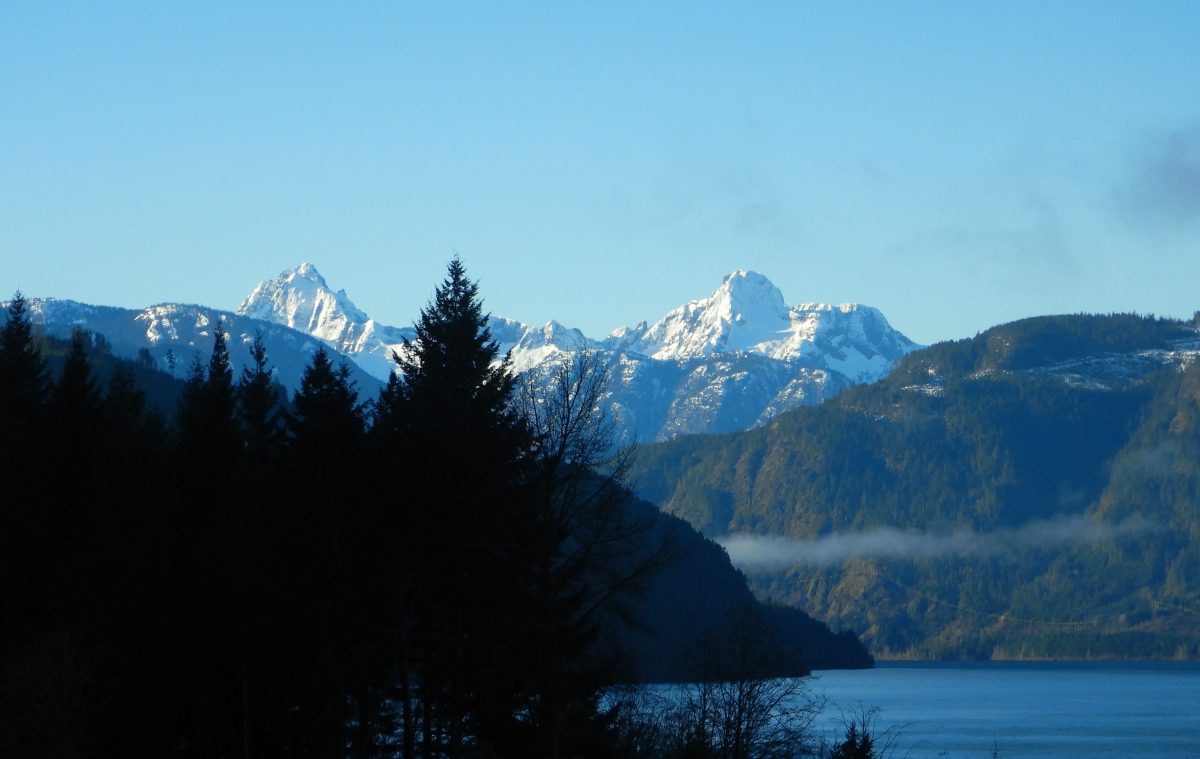
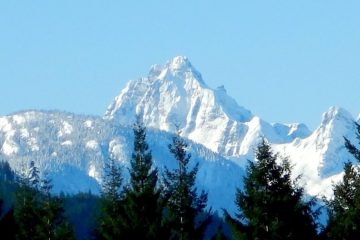
Over on the West side of the Park, the snow line is receding up the mountain sides. Kings Peak looks to have less snow than it did at the end of November. Views across Buttle Lake show uncovered rock on peaks that are usually pristine white, such as the slopes of Mt McBride above Marblerock Canyon.

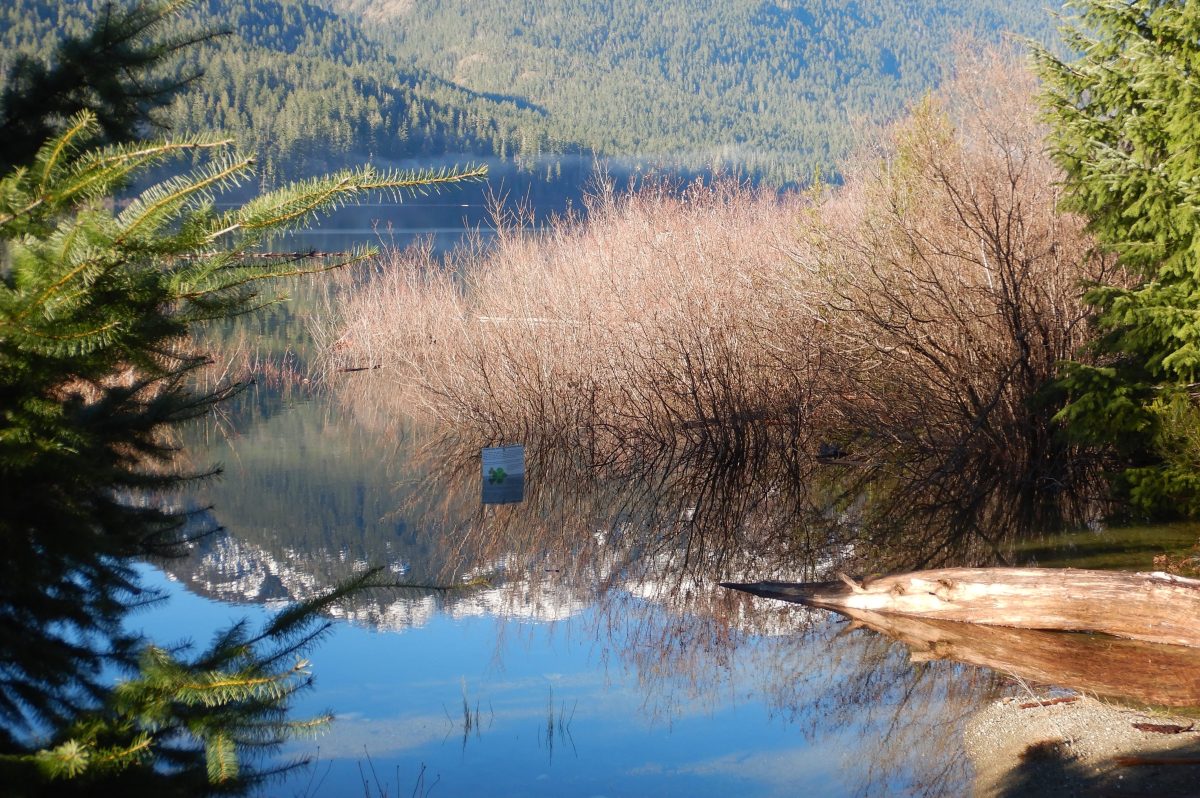
As a result of the snow melting off the peaks, in addition to the heave precipitation in early January, lake levels are extremely high. Shoreline shrubs are inundated, with the water’s edge well up the boat launches and on the beach area beside the Karst Creek ramp an interpretive sign is half under water.

For those planning to venture into the Bedwell Lakes area, note that there has been a recent washout closing road up to the trailhead and Jim Mitchell Lake. Repair work is underway, according to the January 16th post on the Advisories Page of the Strathcona Park Website, so it would be advisable to check that page for updates: https://bcparks.ca/strathcona-park/.

UPCOMING EVENT IN MARCH (reminder)

March 6th : Stan Hagen Theatre : 7:00 pm.

We are delighted to announce an exciting and timely presentation by Mary Sanseverino, mountain photographer, member of ACVVI and retired U. Vic professor.

Let the Images Speak: The Mountain Legacy Project, Re-photography, and Voices from the Canadian Mountain West.

Details, including ticket sales information, will be appear in the next Enewsletter.

ANOTHER RECENT ARTICLE ON OUR WEBSITE

A Wonderful Oddity at Paradise Meadows: A species dependent on Perisoreus canadensis pacificus? by Loys Maingon (retired biologist and SWI Research Director)

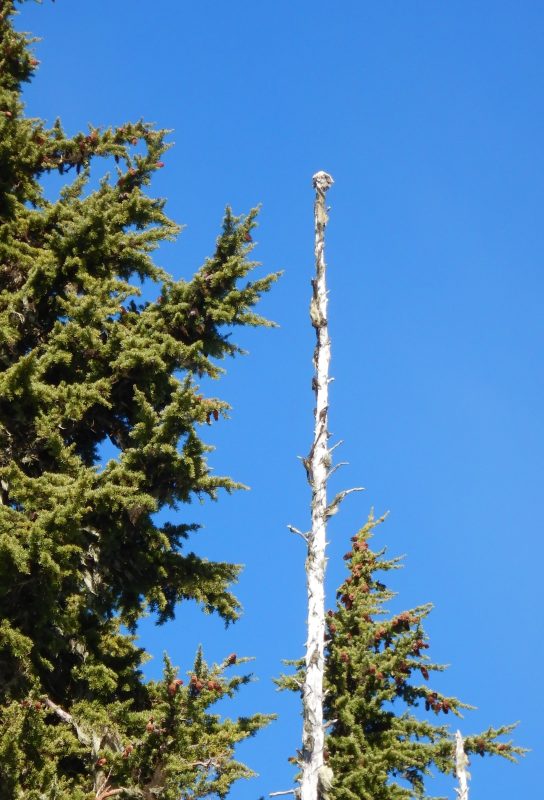
The subject of this article – the “crab’s eye lichen” – a species of lichen officially considered “at risk”, has been found typically at the top of dead cedar spires in several fen areas in the Park, but this example from Paradise Meadows has been missed, possibly because we tend not to expect to find rarities right outside the front door. The specific location is close to the junction of the Centennial loop with the Paradise Meadows extension, with the spire partially obscured by the neighbouring conifers; the lichen would only be seen by people going anti-clockwise around the Centennial loop (contrary to our usual practice) and scanning the tree-tops.

To read the article click on the URL below:
https://strathconapark.org/w/wp-content/uploads/A-Wonderful-Oddity-PDF.pdf

NATURALISTS' NOTES – Canadian fauna in the Park.

Castor canadensis

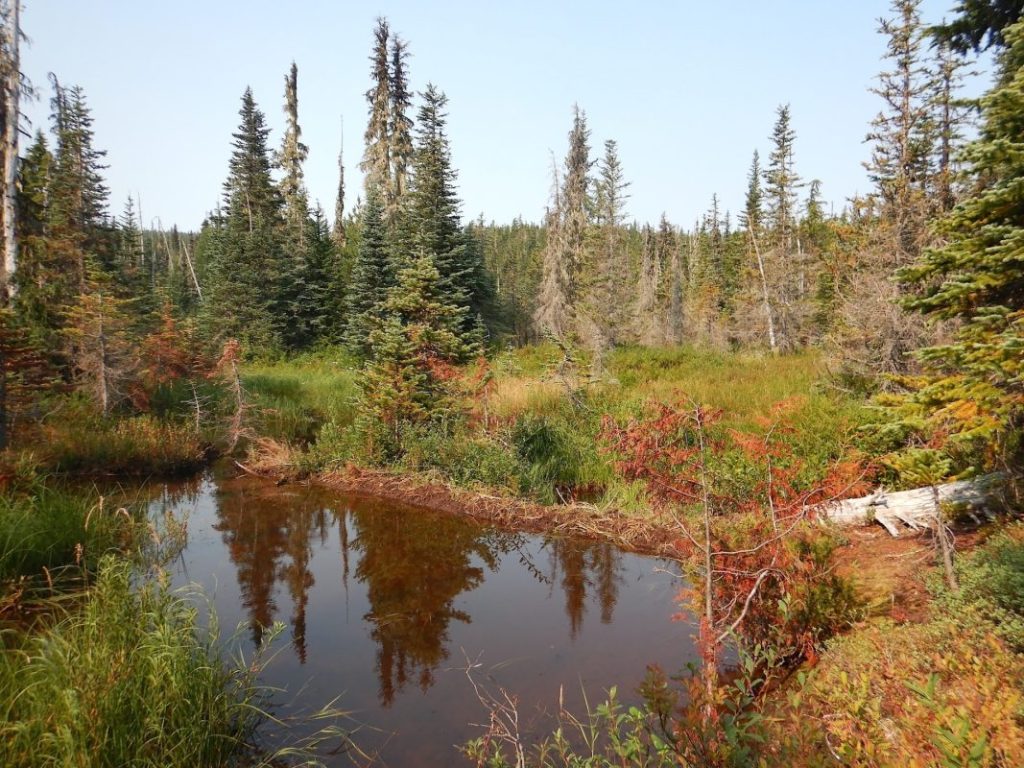
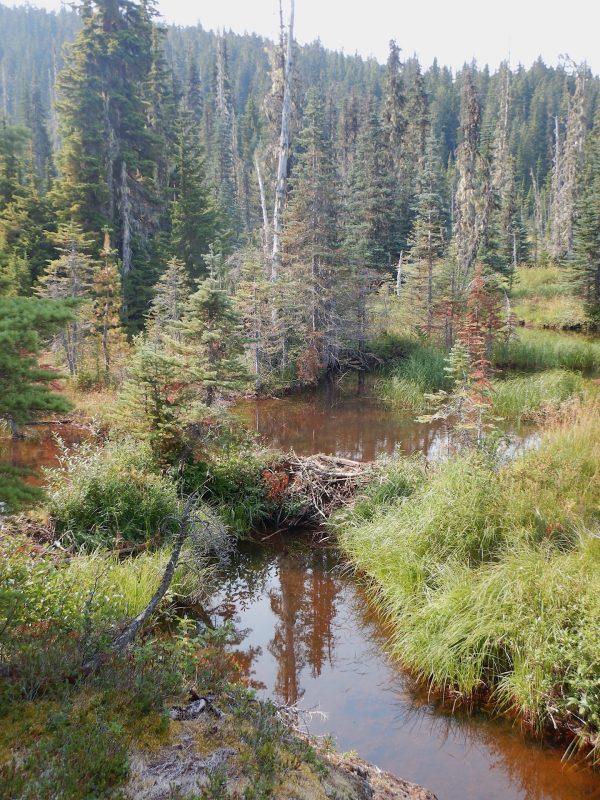
We have observed beaver activity around McKenzie Lake (half way along the Plateau Traverse) over the past fifteen years. More than one Lodge has been established over time in the wetlands on the south eastern margin of the Lake. In early morning or late in a summer evening one of them can be spotted swimming and splashing in the Lake. This past Fall we found an extensive new structure damming one of the streams that flows into the south end (head) of the lake. The photos below show the structure from both sides. This structure may well alter the area of McKenzie Meadows above the south end of the lake, affecting the trail from the Meadows to Indian Head and Drabble.

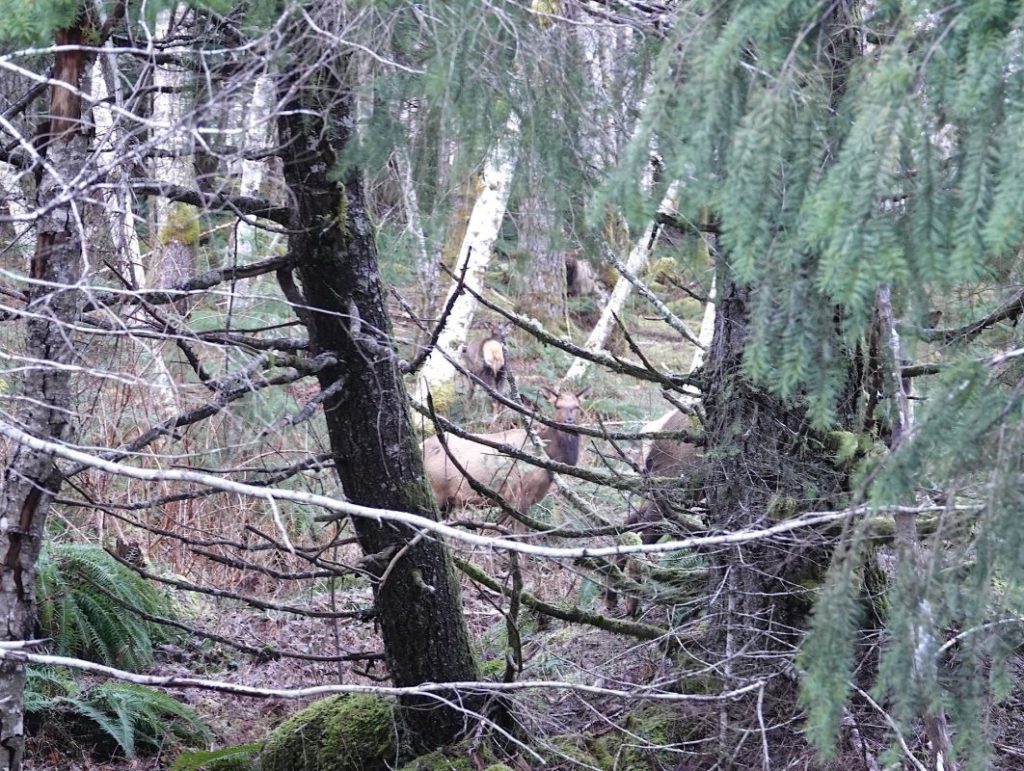
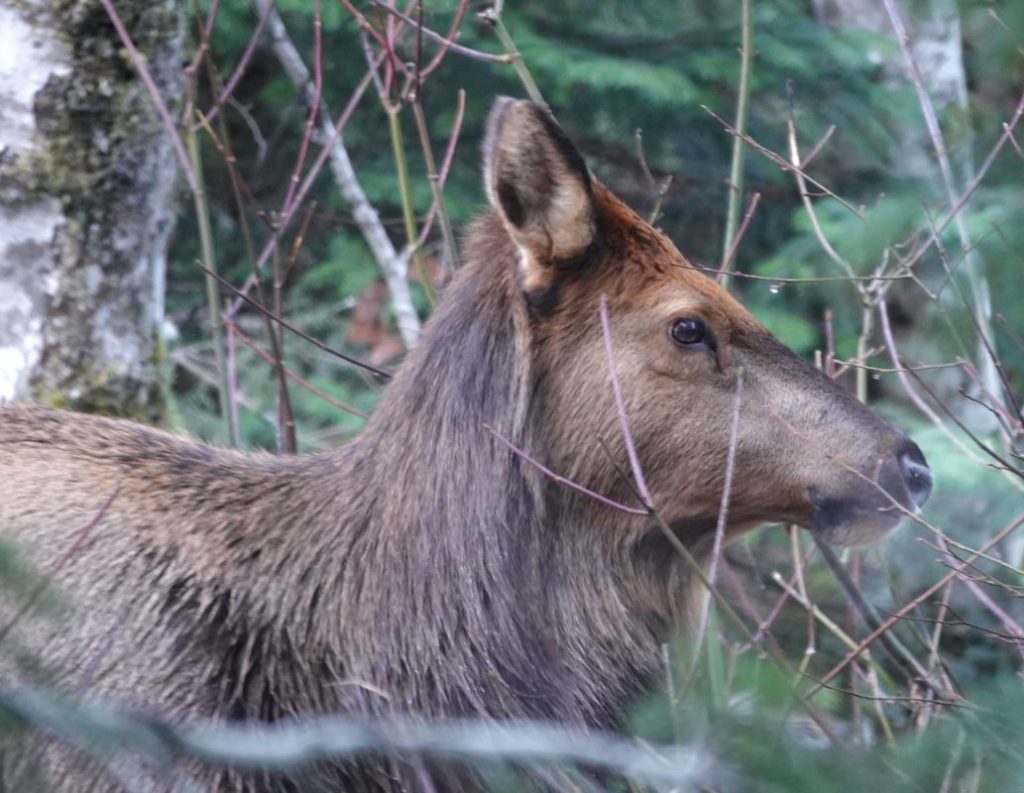
Cervus canadensis ssp. roosevelti

The elk that you will see in the park is one of four subspecies of Cervus canadensis, the one whose habitat covers the temperate rainforests of BC down to northern California and which was named after American president Theodore Roosevelt. Last week we were delighted to catch sight of a small herd of about 25 browsing in the mixed forest vegetation just off Highway 28 along the valley of the Elk River (no surprise). The group consisted of females and last year’s young. This was not unexpected since the antlered bulls with their huge racks tend to live in separate small groups except in mating season, and it would be too early in the year to be misled by a male having shed its the antlers, which usually happens in March or April. We more often see tracks or droppings of the elk, close to the rivers in the west side of the Park, and so we were lucky to have the opportunity to photograph members of the herd quietly enjoying their lunch on a springlike day.

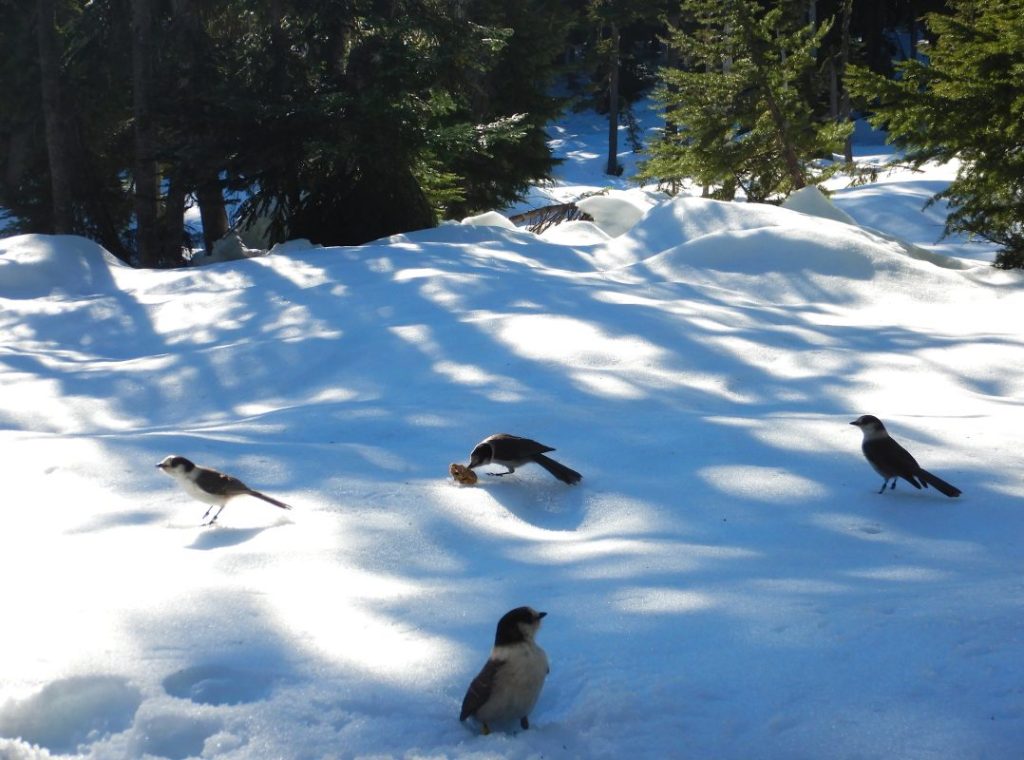
Perisoreus canadensis ssp. pacificus

As we paused for a lunch snack on the way to Lady Lake on Monday under a warm sun, the appearance of food naturally attracted some local Canada Jays. Four of them, three banded (and so known to Dan Strickland and his researchers) but one not, circled and descended at our feet. They were not disappointed with crumbs of oatmeal “survival” cookies. Noticeable in their behaviour was an obvious “pecking” order that Dan and Andie Siemens had demonstrated in their workshops for the past two summers at Paradise Meadows. And it was the unbanded (most likely male) bird that drove the other three away from the loot to have the first chance at gleaning what it could to cache.

In the end, out of curiosity, we sacrificed a whole cookie, too heavy for them to lift. After they all pecked off bits, one managed to pick it up and flew several metres away from the spot (obviously having difficulty with the weight), but not long after it was the unbanded Jay who managed to carry off the prize to a cache up in the trees at some distance away.

Elkhorn & Kings Peak, January 16.